Chapter 4: Cell Structure & Function
Before We Begin
Answer these in the WIKI square of your notebook before the lesson. Guess if you don’t know, and don’t look anything up.
- What is the smallest thing you think is alive?
- What do you think is inside one of your cells?
- Why can’t a cell just keep growing bigger forever?
Eve of Destruction
Our story thus far . . .
- Now- we have chains of DNA just floating around getting murdered by the billions- UV light, heat, cold chemical reactions- the Savage Garden of murder, death, kill at its finest.
- Luckily there was so much DNA that weird crap was inevitable. Eventually some fatty molecules clumped into a bubble around a chain. That bubble is the first cell membrane.
- This seems unlikely to spontaneously happen but that’s because we don’t have the brains to really conceptualize how much DNA was around and for how long.
- The early ocean wasn’t a swimming pool of DNA - it was a planetary scale chemical reactor running continuously for hundreds of millions of years
- If you took all the grains of sand on every beach on Earth and multiplied that by a billion - you’re starting to approach the number of molecular interactions happening every second in the early ocean
- Most of those interactions were destructive - UV radiation, heat, chemical reactions shredding DNA chains faster than they could form
- But some weren’t . . .
A Place to Call Home
- Given enough time and enough attempts something statistically unlikely becomes statistically inevitable
- Eventually, one chain got lucky. A bubble of fatty molecules formed around it, creating a barrier between inside and outside.
- That barrier is the first cell membrane
- A lipid bilayer - essentially a fat bubble - that just happened to be chemically stable and just happened to protect the DNA inside
- That one lucky bubble is the ancestor of every cell that has ever existed on Earth
- The reason it feels unlikely is- human brains evolved to think in years and maybe generations, not in hundreds of millions of years across a planetary ocean. We are genuinely not wired to feel how inevitable the unlikely becomes at that scale.
- This is very very important to internalize when it comes to REALLY thinking about science.
Our Bubble Buddy
- The bubble formed by accident
- But inside the bubble conditions were different - more stable, more concentrated, less exposed to the chaos outside
- The DNA inside the bubble had a better chance of copying itself successfully
- Better copying means more bubbles
- More bubbles means the ones with slightly better membranes survive longer
- The ones that survive longer make more copies
- The ones that don’t survive don’t
- Over millions of years the bubbles get better and better at being bubbles
- That is natural selection in its simplest possible form - not survival of the fittest, survival of the one that didn’t die long enough to make a copy
- The key insight is that the membrane didn’t form because it was useful - it formed by accident and turned out to be useful. Natural selection doesn’t plan ahead. It just keeps what works and discards what doesn’t. The membrane worked. So it stayed.
Home Furnishings
- Each one of these started as an accident. Each one made the cell slightly better at surviving. Each one got kept because the cells that had it outlasted the cells that didn’t.
- That’s it. That’s the whole cell. A house that built its own furniture over two billion years.
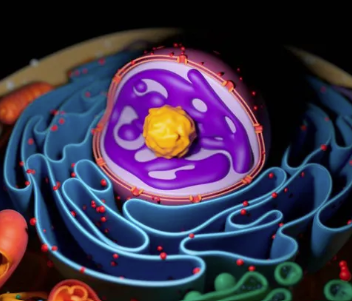
Nucleus
The nucleus formed - a membrane wrapped itself around the DNA to protect it, like a locked filing cabinet in the middle of the house. DNA is too important to leave lying around.
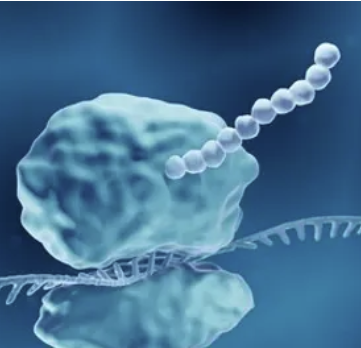
Ribosomes
Ribosomes appeared - tiny protein building machines, essentially the construction crew that reads the DNA instructions and builds everything else- henceforth known as the Ikea of the cell. These actually came first- every bacteria has ribosomes.
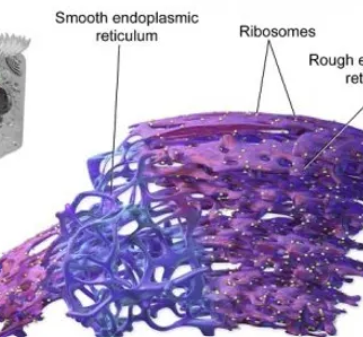
Endoplasmic Reticulum
The endoplasmic reticulum formed - the cell membrane folded inward creating a highway system for moving proteins around
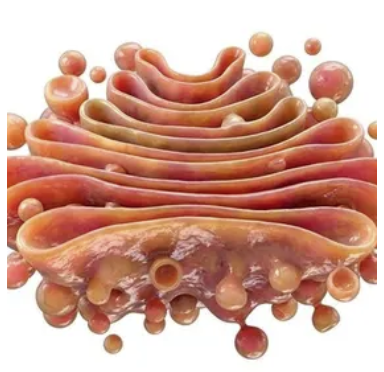
Golgi Apparatus
The Golgi apparatus appeared - a packaging and shipping department that takes proteins, labels them, and sends them where they need to go
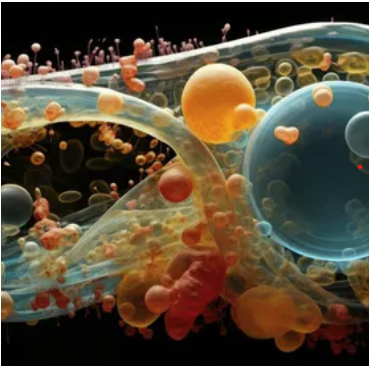
Lysosomes
Lysosomes formed - the cleanup crew, breaking down waste and worn out parts so the raw materials can be reused
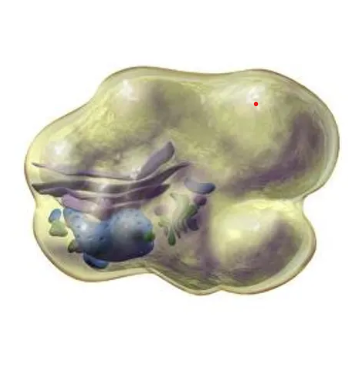
Vacuoles
Vacuoles developed - storage units, holding water, nutrients, and waste until the cell needs them or can dispose of them
But of Course, Things Had to Get Weird
- About two billion years ago a larger cell did something that would change life on Earth forever - it swallowed a smaller bacterium whole but didn’t digest it.
- Maybe it tried and failed. Maybe the bacterium had a chemical defense. Nobody knows exactly why. But instead of becoming lunch the bacterium just - stayed.
- And it turned out the bacterium had a superpower. It was incredibly good at taking food molecules and converting them into usable energy. Better than anything the host cell could do on its own.
- So a deal got struck - not consciously, nothing here is conscious yet - but the cells that kept their bacterial roommate alive got more energy.
- More energy meant more copying.
- More copying meant more cells with bacterial roommates.
- Over millions of years the roommate stopped being a separate organism and became a permanent part of the cell.
- We call that roommate the mitochondria.
But wait, there’s more . . .
- Every mitochondria in every cell in your body still has its own DNA
- It is still technically a separate organism
- It still reproduces on its own schedule inside your cells
- Mitochondrial DNA is almost always inherited from your mother - it is the rule with very rare exceptions.
- You are not one thing
- You are a colony that forgot it was a colony
But wait wait- there’s even more
- A larger cell absorbs a cyanobacterium - a bacterium that had figured out how to convert sunlight into food
- Instead of digesting it the cell keeps it
- The cyanobacterium gets protection
- The host cell gets a food factory powered by sunlight
- Over millions of years the cyanobacterium becomes the chloroplast
- Just like mitochondria - chloroplasts still have their own DNA
- Just like mitochondria - chloroplasts still reproduce independently inside plant cells
- You can still see the double membrane - the outer one from absorption, the inner one original to the bacterium
Mitochondria
Then the mitochondria deal happened and everything changed:
- Suddenly instead of inefficiently burning food the cell had a specialist doing the job
- The mitochondria could extract dramatically more energy from the same amount of food, like going from a campfire to a furnace
- Cells with mitochondria immediately outcompeted everything else
Chloroplasts
Then some of those cells stumbled onto an even lazier solution:
- Why chase food at all when you can just sit in the sun
- A cell that already had mitochondria absorbed a photosynthetic bacterium
- Now it could make food directly from sunlight
- No hunting, no chasing, no competition for limited food sources
- Just point yourself at the nearest star and let the energy come to you
In Conclusion
- Life did not appear, it accumulated
- Simple chemicals became nucleotides- Nucleotides chained into DNA- DNA learned to copy itself
- A fat bubble formed around a lucky strand and became the first cell
- That cell got better at surviving one accidental improvement at a time. It stole its power source. It stole its solar panel
- Every living thing on Earth, every bacterium, every tree, every human, is a descendant of that first lucky bubble
- You are the result of billions of years of chemistry refusing to quit
- And every single cell in your body still runs on the same four letter code that started it all in the goo